

Broken strings
Loving something too much to touch it

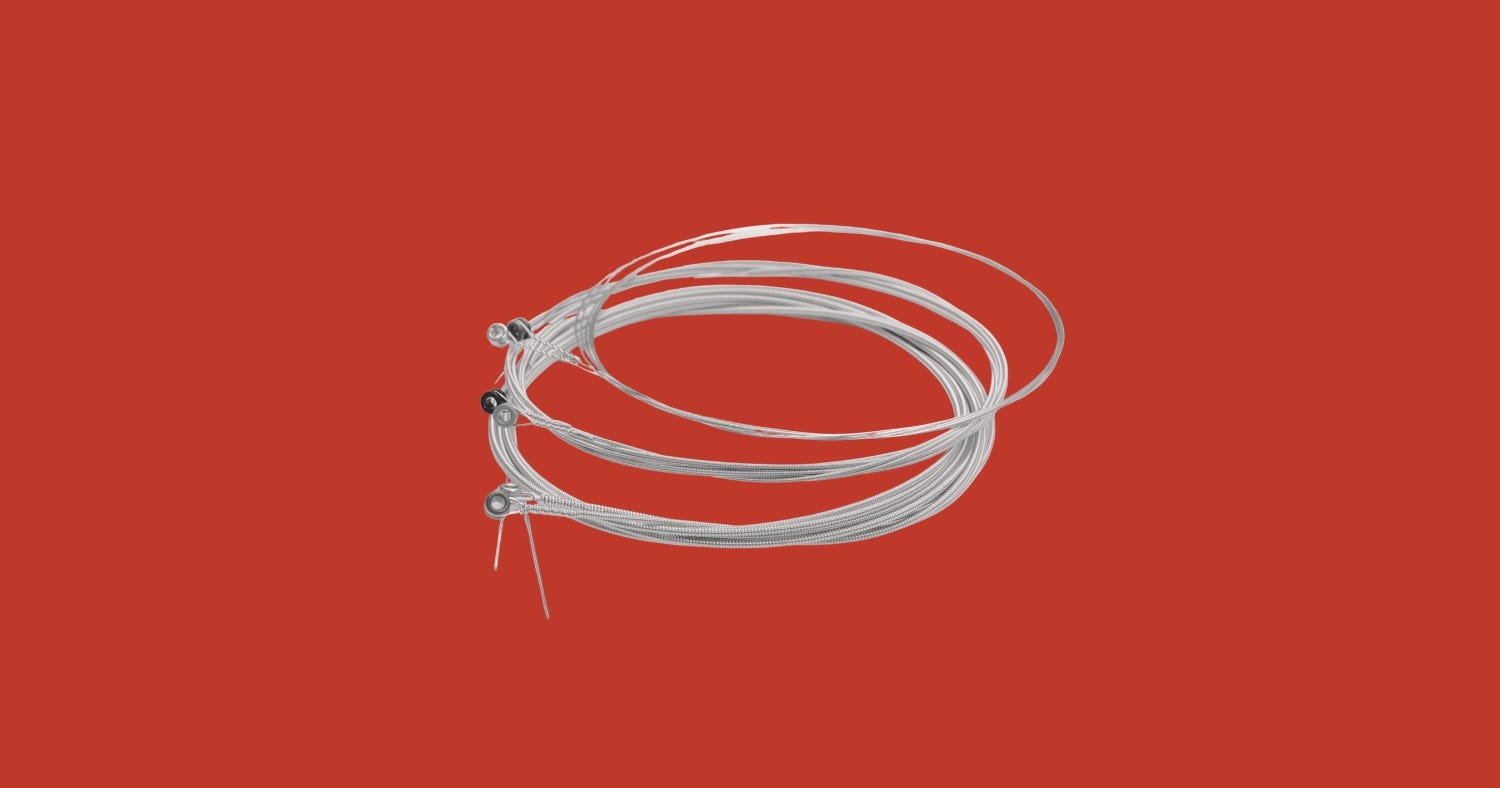
I have two electric guitars hanging from the wall in my office.
They haven’t been played properly in years. They’re good guitars and don’t deserve the dust they gather. But they sit there because picking them up meant facing something I wasn’t ready to face.
A long, long time ago I was a proper guitarist.
Electric guitar, five hours a day, fast and creative with my fingers. Had a metal band. We recorded demos on cassette tapes with photocopied sleeves, then moved onto CDs. We played some gigs, intense ones, and felt the crush of the people up front, the sweat flying, the fists in the air pumping to every riff.
Living my dream. Rock n’ roll.
Then we parted ways. I went off to study. I didn’t really want to but let’s just say I was squeezed into it by a person who insisted I have a future that could provide stability and a proper salary. I played in a couple of bands during that time, but they were more interested in having fun, while I was serious about taking the music somewhere beyond studios and pubs. I busked a bit with some great people on busy tube stations, just to feel alive again. Whenever I was back home, I’d reconnect with my old band and jam, but there was always a cut-off date.
All that feels like something from another lifetime now. Life catches up with you, you know, my priorities shifted. Guitars came with me wherever I went, but they were just decoration.
There was a time when changing the strings was a sacred process. Winding off the old ones, sliding them through the bridge, pulling them out. Cleaning the fretboard, the pickups, every nook and cranny. Then fresh strings on, tuning up. The joy of playing my go-to riffs and hearing the metallic brightness of the new strings. Picking away to let the strings settle in, lost in dreams of metal festivals and hungry crowds.
Somewhere along the way, those dreams faded.
A string would snap and I’d just leave it hanging off the bridge. Sure I had the time to change it, but restringing a guitar I could no longer play the way I wanted felt bad.
What was the point of looking after something I’d already decided I’d failed at.
Two things about me, just so you’ve got a better gauge of my actions.
When people tell me “you’re wasting your talent, keep playing the guitar, it’s such a shame”, I’ll do the exact opposite. Call me reactionary if you like, but that’s how I am.
The other thing is I’m a bit of a perfectionist. On guitar, that meant if my fingers couldn’t do what I wanted them to do on the fretboard, I wasn’t interested in just strumming along regardless.
I demanded full recovery of my skills or no playing at all.
And if I couldn’t carve out a couple of hours of pure focus every single day for a couple of months, I’d rather not even start.
Every time I picked up a guitar and tried to find my way back in, I’d stop after five minutes, feeling worse than before I’d started.
I wanted my hands to remember everything instantly, the way they used to. Starting again from anything less than where I’d left off felt like an insult to who I used to be.
So I stopped trying to start. Easier to feel guilty about an untouched guitar than humbled by a rusty performance.
Playing in that band was one of the best things that ever happened to me. In a way, my entire persona has revolved around it since.
And for all the years since studying, I’ve carried a very specific kind of pressure. Not really the pressure to play per se. It was more the pressure to keep the door open, to leave the possibility alive, to hold onto proof that this was still part of me.
Because if I don’t play, doesn’t that mean it’s not a part of me anymore?
So, one day, I got them down, polished them, changed the strings, plugged one in, and strummed around for a while. One hour later I was happy. Not skilled as in my prime, but happy.
And it dawned on me that I could just play when I wanted to, without needing to be as good as I once was. It was suddenly OK to let go of the ‘expert guitarist’ hat I’d fought so long and hard to keep, and pick up a smaller one instead. Same guitar, same hands, different hat.
The guitars are still there.
Every now and then I pick one up and play for as long as I like.
And I’m good with that. When a string breaks, I change it immediately, so it’s ready to go when I am.
We all wear hats like this.
Parent, sibling, friend, gym-goer, gamer, bookworm, movie fan, metalhead, hiker, rock climber, board game lover. The reliable one, the pragmatic one, creative, direct, empath…
Some hats we chose. Some chose us.
A few we wear with pride, and others out of habit, guilt, or a desperate need to hold onto a big part of our life’s story.
For me, the guitar was never the problem. My rule was the problem, the one that said my hat only counts if I was wearing it at full size.
You’ve almost certainly got a version of that same rule running somewhere in your work life.
The project you’ll never volunteer for unless you can do it brilliantly. The opinion you won’t share unless you can defend it fully. The boundary you postpone setting unless you feel confident enough you can hold it completely.
All or nothing, expert or silent. It feels like a standard you’re upholding. But it’s just another door to hide your fear behind.
A hat doesn’t have to fit the way it used to for it to still be yours. It’s allowed to shrink. To change shape. It’s still your hat.
Somewhere you’ve got one hanging on a wall, gathering dust because you decided it only counts at its old size.
Take it down. Put it on. And see what it’s like at the size it actually fits now.
If you’re interested in why I’m reactionary when someone tells me I ought to do something, check out the following essay:

Check out some of my other Quiet Rebel essays:


I like the way you refer to your skills as ‘hats’. One of mine is throwing a few edible things together and the end result always tastes great for me and the other half. A tatty hat that's never been shown in public except when I feel like baking cakes, biscuits etc. for the workers (locusts they are).
Oh I struggle with this so much. Why would I start substack if I don't REALLY know how to write? Why would I approach someone at work about this project if I don't think I have the capacity or skill to do it perfectly? And then I watch someone who by my standards does not have it either just do it and figure it out or do not perfectly but it's still better than nothing.